
Winter Indoor Air Quality Checklist for Texas Homes


When a cold front moves through Texas, windows close and the heater gets more use. Dust, cooking odors, and dry-feeling rooms can become harder to ignore. Before buying another air freshener or a new piece of equipment, start with the things that affect the air already moving through your home.
This winter checklist can help you spot useful changes and decide when to ask Quality Cooling & Heating about indoor air quality services.
1. Check the filter and its fit
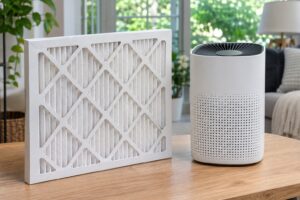
Look at the filter on the schedule recommended by its manufacturer and your HVAC technician. A filter can need attention sooner in a home with pets, renovation dust, or heavy system use. Confirm the size, direction arrow, and fit before installing a replacement. Gaps around a filter can let air bypass it.
A higher filter rating is not automatically the right upgrade. Your system needs enough airflow to heat properly. Ask a technician which filter your equipment can accommodate before changing to a more restrictive option.
2. Reduce dust where it starts
Use entry mats, leave dusty shoes near the door, and clean hard surfaces with a damp cloth. Vacuum regularly with equipment suited to your flooring. Keep return grilles and supply vents clear of furniture, rugs, and stored items.
Look for patterns, too. Dust that returns quickly in one room, a poorly fitting filter, or debris around a return grille gives a technician something specific to investigate. These observations are more useful than assuming every dusty home needs duct cleaning.
3. Measure humidity instead of guessing
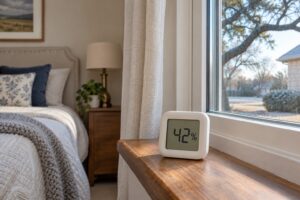
A small hygrometer can help you compare bedrooms and living areas. The EPA recommends keeping indoor relative humidity below 60%, ideally between 30% and 50%. Window condensation or damp surfaces deserve attention even if another room feels dry.
Quality offers whole-home humidifier and dehumidifier services. Measuring first helps determine whether adding moisture, removing it, or correcting another issue makes sense.
4. Address sources before masking odors
Use kitchen and bathroom exhaust fans that vent outdoors when needed. Follow product labels for household cleaners and store chemicals appropriately. Persistent musty smells, water stains, or visible moisture call for finding the source. Fragrance and filtration cannot repair a leak.
Outdoor conditions matter when ventilating. Opening windows during a high-pollen day or nearby construction may introduce more particles. Choose ventilation strategies around your home’s conditions.
5. Match equipment to the problem
Filtration and air cleaning can supplement source control and ventilation. They do not replace those steps. A particle problem may call for a different approach than excess humidity or a recurring odor.
Air purifiers also do not replace carbon monoxide alarms or proper maintenance of fuel-burning equipment. Review your alarm manufacturer’s testing and replacement instructions, and ask about carbon monoxide detection if you have questions about your home’s setup.
Get help with your home’s winter air
Quality Cooling & Heating can discuss your concerns and the options offered on its air quality service pages. Request an indoor air quality assessment and tell the team which rooms are affected, when the problem occurs, and what you have already tried.
 HVAC
Winter Humidity in Texas: Do You Need a Humidifier or Dehumidifier?
Dry rooms and window condensation can point to different humidity problems. Learn what to measure before choosing whole-home…
 HVAC
Whole-Home Air Purifier or Better HVAC Filter: Which Does Your Home Need?
Learn how HVAC filters and whole-home air cleaners differ, why airflow matters, and what to ask before choosing…
 HVAC
Bringing Comfort to You – HVAC Services in Brownwood, TX by Quality Heating & Cooling
We’re excited to announce that Quality Heating & Cooling is now proudly offering professional HVAC services in Brownwood,…
 HVAC
Evaporator Freezing Up Solutions
Evaporator freezing is a common issue faced by many homeowners with heating and cooling systems. This problem occurs…