
Winter Humidity in Texas: Do You Need a Humidifier or Dehumidifier?

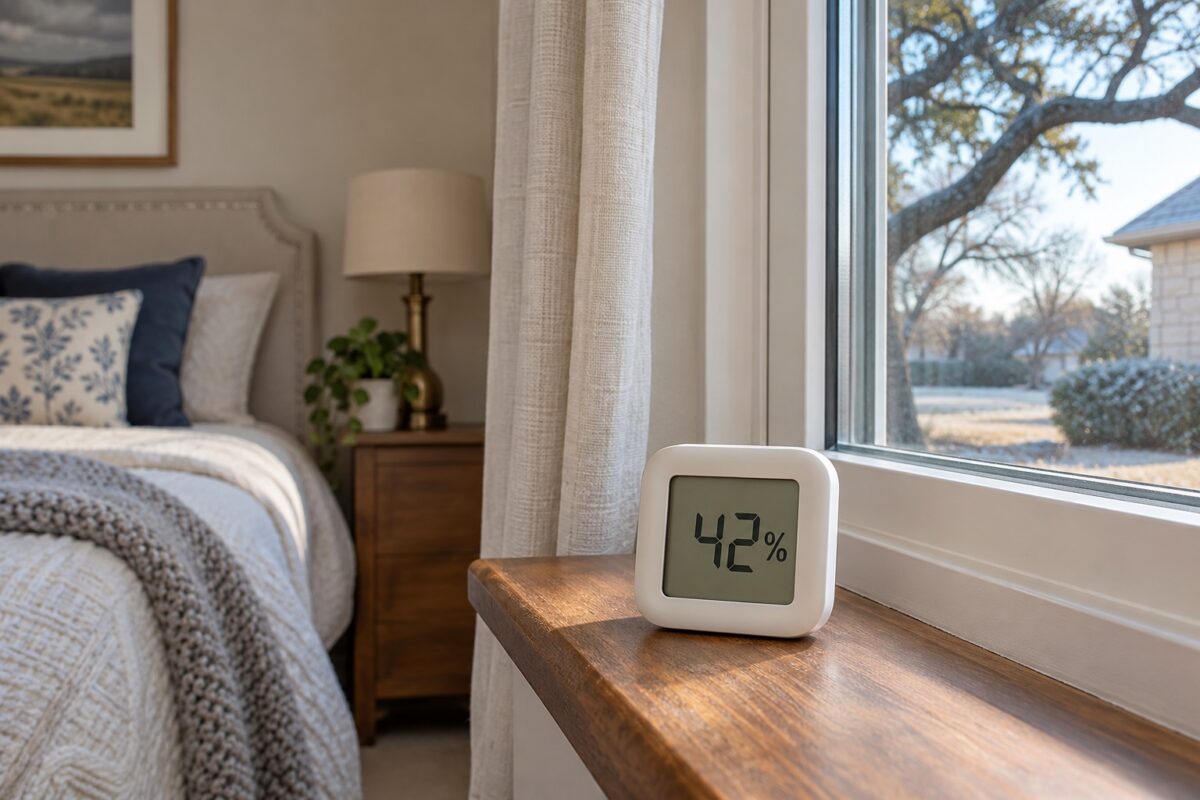
One Texas winter week can bring cold, dry weather; another can feel mild and damp. Inside the house, a bedroom may feel dry while a bathroom stays humid. Those differences make it difficult to choose between a humidifier and a dehumidifier based on comfort alone.
Before adding equipment, measure the conditions and look for the source. Quality Cooling & Heating offers whole-home humidifier and dehumidifier installation and service, and those options work best when they address a verified need.
Start with a humidity reading
Use a hygrometer to check relative humidity in the rooms where you notice a problem. Take readings at different times over several days. Keep the device away from direct sunlight, supply vents, and immediate moisture sources so the reading better represents the room.
The EPA recommends indoor relative humidity below 60%, ideally between 30% and 50%. Treat that range as a starting point, then watch how your house responds. Condensation on windows or other cold surfaces means moisture is collecting there and should be investigated.
When adding moisture may help
Low humidity readings can help explain a dry-feeling room or frequent static. A humidifier adds water vapor to the air. A whole-home model works with the home’s HVAC setup, while a portable model serves a smaller area.
Adding moisture requires control and maintenance. Follow the equipment manufacturer’s cleaning instructions, change service parts as directed, and avoid turning the setting up simply because one room still feels uncomfortable. A draft or temperature imbalance may need a different fix.
When removing moisture may help
Repeated high readings, damp rooms, or condensation can point toward excess moisture. A dehumidifier removes moisture from the air, but it cannot repair a plumbing leak, stop rain intrusion, or correct every ventilation problem.
Check for visible water, leaking fixtures, and exhaust fans that are not doing their job. Persistent moisture needs its source addressed. If a musty smell or damp area returns after cleaning, describe that pattern when requesting service.
Why winter rooms can behave differently
Showers, cooking, laundry, outdoor weather, and room temperatures all affect indoor moisture conditions. A closed bedroom, cool exterior wall, or bathroom with limited exhaust can behave differently from the main living area.
Keep a simple record of room, temperature, humidity, time, and recent activity. That information helps a technician distinguish a house-wide issue from a room-specific concern. It also provides a baseline for checking an adjustment later.
Humidity control and air purification do different jobs
A humidifier adds moisture. A dehumidifier removes it. Filters and air cleaners address other air quality concerns according to their design. If the main complaint is dust or pollen, humidity equipment alone may not address it; if the issue is condensation, an air purifier will not remove the underlying moisture source.
Your home may need more than one improvement, or it may need a repair before any new equipment is appropriate.
Plan a practical next step
Gather several days of readings and note any condensation, damp areas, or dry-feeling rooms. Then request service from Quality Cooling & Heating. The team can discuss your HVAC setup and the humidity control options available for your home.
For a broader look at filtration, air purification, and related services, visit the indoor air quality page.
 HVAC
Whole-Home Air Purifier or Better HVAC Filter: Which Does Your Home Need?
Learn how HVAC filters and whole-home air cleaners differ, why airflow matters, and what to ask before choosing…
 HVAC
Winter Indoor Air Quality Checklist for Texas Homes
Keep winter air more comfortable with practical checks for HVAC filters, household dust, humidity, ventilation, and indoor air…
 HVAC
Bringing Comfort to You – HVAC Services in Brownwood, TX by Quality Heating & Cooling
We’re excited to announce that Quality Heating & Cooling is now proudly offering professional HVAC services in Brownwood,…
 HVAC
Evaporator Freezing Up Solutions
Evaporator freezing is a common issue faced by many homeowners with heating and cooling systems. This problem occurs…