
Fix Your Kitchen Sink Is Stopped Up: Easy Drainage Solutions

Dealing with a stopped-up kitchen sink can be a real disruption in your daily routine. Whether it’s caused by food scraps, grease, or stray objects, a clogged sink is a common household issue. At Quality Cooling, Heating & Plumbing, we understand the importance of keeping your kitchen functional and hassle-free. Knowing how to tackle this problem can save you time and prevent future plumbing headaches.
This guide will walk you through practical, eco-friendly solutions to unclog your sink, ensuring your kitchen runs smoothly. By the end, you’ll know how to handle a blocked sink efficiently and safely.
Common Causes for a Stopped-Up Kitchen Sink
Understanding what causes your sink to clog can help you prevent it. Here are the usual suspects:
- Food Particles: Small bits of food can gather in pipes, leading to clogs.
- Grease Buildup: Grease can harden in pipes, trapping other debris.
- Soap Scum: Soap residue can accumulate over time, contributing to blockages.
- Foreign Objects: Items accidentally dropped down the drain can block water flow.
For a deeper understanding of how plumbing systems have evolved to handle these issues, explore 27 Historical Events that Shaped Modern Plumbing Systems.
Quick Fixes for a Clogged Sink Drain Pipe
Before calling in the pros, try these simple solutions to clear your clogged sink:
- Use a Plunger: Ensure there’s enough water in the sink to cover the plunger’s cup, then position it over the drain and pump vigorously to dislodge the clog.
- Boiling Water: Carefully pour boiling water down the drain to dissolve grease and food particles.
- Baking Soda and Vinegar: Pour half a cup of baking soda followed by half a cup of vinegar down the drain. Let it sit for 15 minutes, then flush with hot water.
- Check the P-Trap: Place a bucket underneath, unscrew the trap, and clean out any debris. Reattach securely.
Always prioritize safety by wearing gloves and using proper techniques to avoid injury or damage.
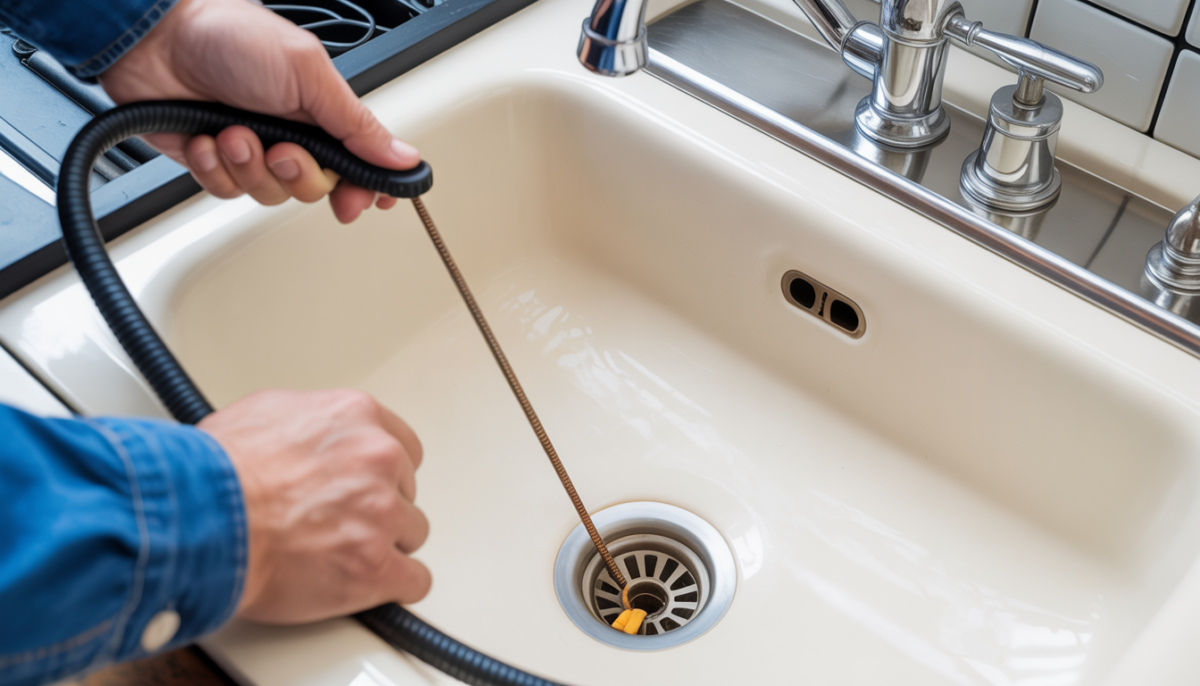
Using a Kitchen Sink Snake Drain
For tougher clogs, a drain snake can be a lifesaver. Here’s how to use it effectively:
- Select the Right Snake: Choose one designed for kitchen sinks, which are typically smaller and more flexible.
- Insert the Snake: Remove the sink strainer and gently insert the snake into the drain, turning the handle clockwise.
- Break Up the Clog: Rotate the snake when you feel resistance to break up the clog, but avoid forcing it.
- Retract and Clean: Slowly retract the snake, bringing debris with it, and clean the snake thoroughly after use.
Always wear gloves and eye protection when using a snake for safety.
Eco-Friendly Ways to Unclog a Sink
Many homeowners prefer eco-friendly solutions. Here are some methods that are safe for the environment:
- Salt and Hot Water: Pour half a cup of salt into the drain, followed by boiling water. The salt acts as an abrasive to clear blockages.
- Biological Cleaners: Use enzyme-based cleaners that break down organic matter without harming the environment.
For more eco-friendly tips, visit Eco-Friendly Ways To Unclog A Drain.
Importance of Regular Plumbing Maintenance
Regular maintenance is key to preventing issues like a stopped-up sink. It helps avoid clogs and extends the lifespan of your plumbing system. Here’s why it’s essential:
- Prevents Major Issues: Regular checks catch small problems early.
- Saves Money: Routine maintenance is often less costly than emergency repairs.
- Improves Efficiency: Well-maintained systems operate more efficiently, saving water and energy.
For more on the benefits of regular maintenance, visit The Importance of Regular Plumbing Maintenance. For expert advice, reach out to Quality Cooling, Heating & Plumbing.
When to Call a Professional
Sometimes, professional help is necessary. Here are signs you should call in the experts:
- Persistent Clogs: If your sink remains clogged despite your efforts, a professional can diagnose the issue.
- Unpleasant Odors: Foul smells might indicate a serious problem, such as a sewer line issue.
- Water Backing Up: Water backing up into other areas could signal a main line blockage.
- Unfamiliar Sounds: Gurgling noises can indicate air trapped in pipes or a significant blockage.
Choose a reliable service with a proven track record, like Quality Cooling, Heating & Plumbing, for expert plumbing solutions.
Ensuring Long-Term Kitchen Sink Drainage
Keep your kitchen sink running smoothly with these tips:
- Regular Cleaning: Clean your sink and drain regularly using baking soda and vinegar.
- Mindful Disposal: Avoid putting grease, coffee grounds, or large food particles down the drain. Use a strainer to catch debris.
- Routine Checks: Schedule regular plumbing inspections to catch issues early.
- Proper Use of Garbage Disposal: Run cold water while using the disposal and avoid overloading it.
By adopting these habits, you can enjoy a smoothly running kitchen sink for years to come. For any plumbing needs, contact Quality Cooling, Heating & Plumbing for professional assistance.
 Uncategorized
Affordable Air Conditioner Repair Prices in Georgetown & More
For homeowners in the Greater Austin area and Abilene, knowing air conditioner repair prices is essential. With Texas's…
 Uncategorized
Expert HVAC Tuneup for Texas Weather | Abilene Maintenance
Living in Texas means dealing with a climate that swings from scorching heat to unexpected cold snaps. For…
 Uncategorized
Expert HVAC Repairs for Abilene & Georgetown Homes
Welcome to the heart of Texas, where Abilene homeowners know the value of a comfortable home. At the…
 Uncategorized
Replacing Hot Water Tank in Georgetown, TX & Nearby Areas
Keeping your home comfortable with a reliable hot water system is essential. If your hot water tank is…